
(2-minute read)
Like a 19th century explorer discovering new continents, encounters with nature can make you feel like you are experiencing the world again, with fresh eyes and a new force.
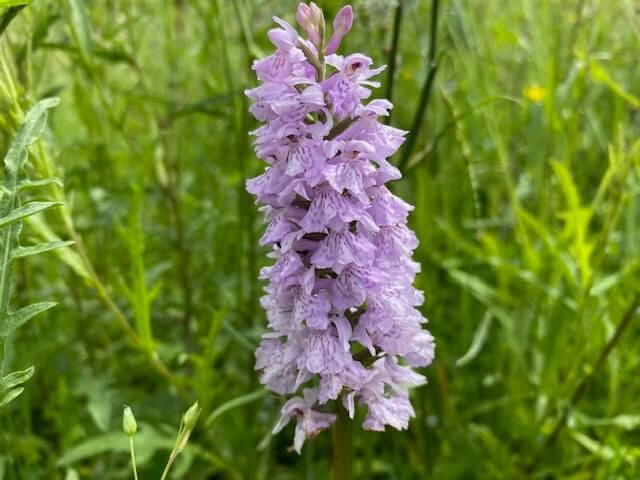
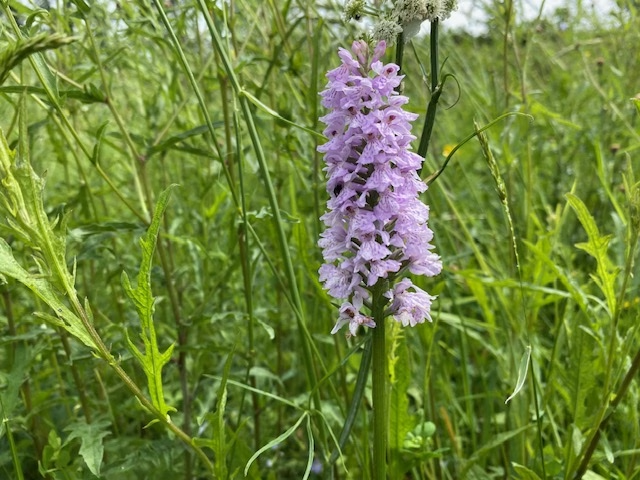
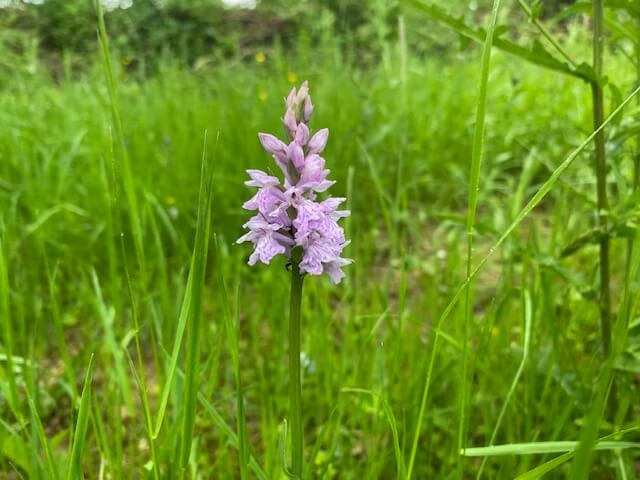
Walking around a meadow here, I found these beautiful orchids. One appeared and then a sprinkle of them over the following days. And, then like a charismatic conjurer they were gone and nowhere to be seen. They had beguiled me and then dumped me.
I’d never come across a plant that created such a sense of excitement and longing: I’d become an orchid hunter.
Next year, please do arrive tomorrow: orchids come back as I need our next encounter.
We had a lot of heat and dry weather in April and early May. Now the rains have come, and we are in a cold snap before the summer heat arrives.
The meadow awaits my return to discover its latest inhabitants. Is it back? Have more arrived to enchant me again? Perhaps another variety has appeared.
The orchid hunter’s quest
Like any good journey, my quest had started before the prize arrived.
I’d heard a lot about local orchids and the joy of walking in the fields around here and spotting orchids in Spring but hadn’t experienced the showtime. It requires a lot of looking down at the ground and not up at the sky.
I’d thought that there must be orchids here, because I’ve seen tourist notices about it and various social media posts.
French orchids
In mainland France there are about 160 species of wild orchids and one in six is threatened with extinction as a result of loss of habitat.
In the French tropics there are more than 1,000 orchid species. The ones in France d’outre-mer (the French overseas territories) are mainly epiphytes, so are attached to trees.
To put this into a global context there are between an estimated 26,000 to 30,000 species of orchids, and orchids are the second largest species of flowering plants.
Fairy dust
Orchids have tiny seeds, dust-like particles that are among the smallest in the plant kingdom. The lightweight seed aids dispersal far and wide, but orchids also require a little help from a friend in the form of fungi. This “mycorrhizal relationship” in simple terms is a nutrient exchange that helps the seeds germinate.
Finding beauty
So, what is this wild beauty? From my research, I think it is a Dactylorhiza fuchsii, the common spotted orchid. I’m about 90% certain now that they are these, but for some days I wasn’t satisfied with this explanation because I couldn’t believe it was “common”.
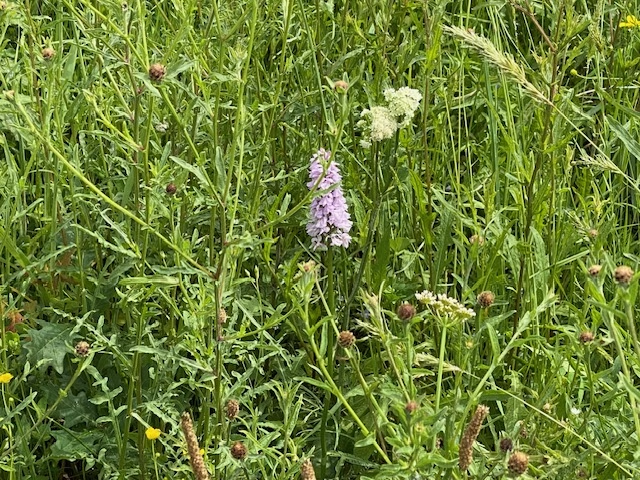
I kept on searching online and even asked a friendly plant expert at a local garden centre if he could help me identify it: I was so convinced it wasn’t “common”.
Perhaps it is not actually “common” and it might be another type of orchid from the Dactylorhiza maculata group. The leaves of ours didn’t have spots which apparently has some significance. Please correct me if I am wrong.
Like what you’ve read in this blog? Why not consider us for your next holiday? Just email or WhatsApp us with any questions you have about our accommodation and/or the area and we will gladly help you.
© 2026, Peyroulat.com. All Rights Reserved. All the original content written on this website is copyrighted and belongs to the writer and publisher. All blogs on this website are original creative content.