
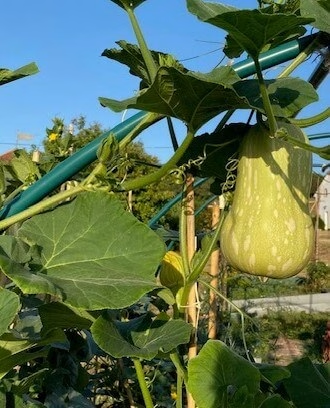
How can I grow Butternut Squash for the first time? What delicious food can I make from Squash? Here are some experiences of growing Butternut Squash for the first time, and three recipes to enjoy on your autumn plate.
10-minute read (For a quicker read, go to headings)

“La Courge Butternut” is its full name in French. In English, butternut starts with a hard and clipped “but” rather than the more fun and elongated “boot” in French.
Growing this crop on the potager (veg patch) presents multiple opportunities to say this wonderful French pronunciation of “boot-ter-nut” all through the growing season and, at the same time – if all goes according to plan – consume this delicious vegetable.
Growing Butternut Squash from seed
This was surprisingly easy. Within a couple of weeks, I had extremely healthy and vigorous little plants. I used a large plug tray and planted one seed per plug, just under the surface. I waited late to sow (in late April) and would do this again as I don’t think I would want to be eating butternut squash in July or August.
| Le potager | Vegetable patch or veg patch |
| Circuit court | Short supply chain |
| La courge butternut or La courge musquée | Butternut squash |
| Basilic | Basil |
| Sage | Sauge |
| Mûr (masculine) or mûre (feminine) | Ripe e.g. the fruit is ripe (le fruit est mûr) |
| Allumettes de lardons fumées | Smoked bacon matchsticks |
| La pâte feuilletée | Puff pastry |
| Sacré bleu | “Oh my gosh” |
| Gascogne | Gascony |
Leaf mould is a potential problem with this vegetable, so you place upturned plant pots in front of the young plants to direct watering away from the leaves. I would continue doing this again but put even bigger plant pots in the ground. When you’ve got a lot of watering to do in the summer, you don’t want to misfire over the large leaves.
I grew mine in a raised bed up an old greenhouse frame with criss-crossed bamboo canes to create a support trellis. We have a big clump of bamboo nearby, and so it is a free resource. In the raised bed where I grew the Boot-er-nut underground bees had moved in, so there was a handy workforce of amazing pollinators living on-site.
We had a very dry summer this year and so there wasn’t much overall chance of leaf mould; however, I am not sure how this plant would fare somewhere wetter or if we had a lot of rain during the growing season. At least for this year, it worked.
Harvesting Butternut
How do you know when you can pick Butternut? From what I’d read, you tap the sides of the fruit. This was great in theory, but in practice I didn’t have a clue what I should be feeling when tapping.
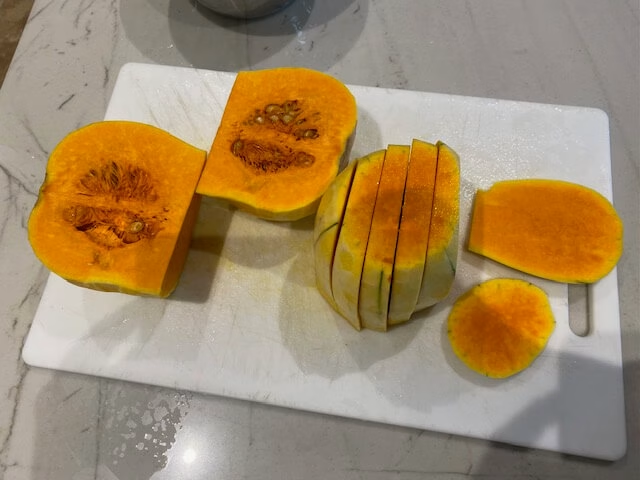
I even tapped the boot-ter-nuts in a local supermarket to compare and contrast.
Also, before harvesting, the fruits must no longer have green stripes. This latter characteristic of a “ripe” (mûr) butternut was rather confusing as even when it was ready, you can still see slight green lines around the top near the stalk.
So, again, we all had a look at what the butternut looked like in the supermarket to see if ours compared to what was on sale – finally confirming that we had the “green light” to pick.
Seasonal autumnal feast
I waited to harvest the first squash until the third weekend in October.
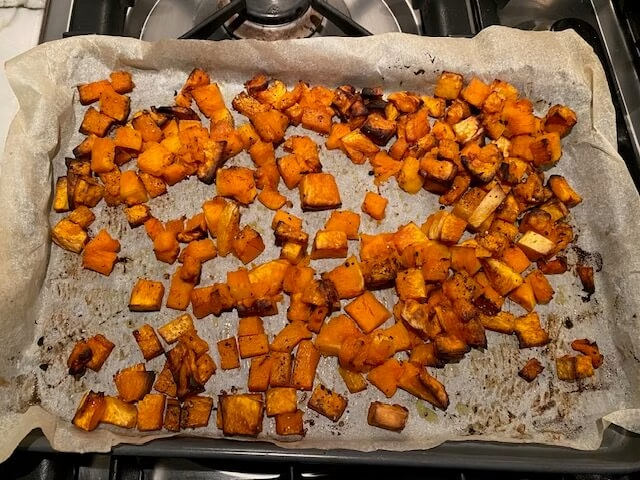
When the time came, it felt like we were enacting an ancient food ritual because the whole weekend’s culinary consumption became about the butternut: how we could appreciate it and cook it multiple ways.
But that is the joy of a short supply chain (circuit court). It is not only good for the environment as we don’t have to use a car to buy our vegetables, but it is also extremely fresh – and the food has a greater value to it that you can’t achieve when you buy from a shop.
I made three meals from two butternuts harvested.
Butternut Squash pasta sauce recipe
I cut and diced the butternut squash and roasted it in the oven. I then cooked one red onion, a small pack of smoked bacon matchsticks (allumettes) and added a crushed clove of garlic. I added fresh thyme and parsley and some water to stop it drying out. Then, I added the diced butternut and then crème fraiche.
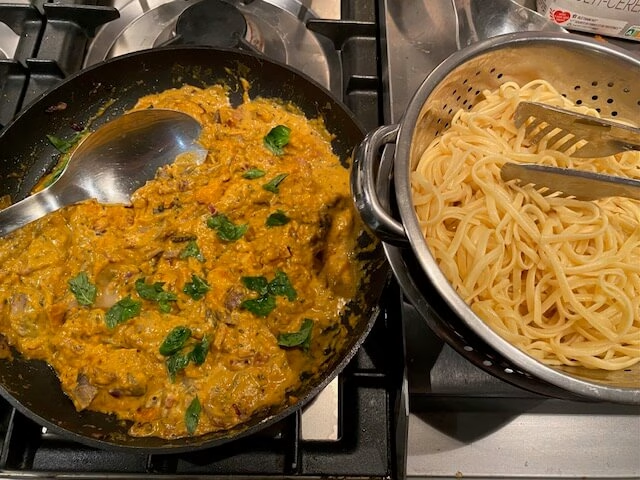
This reminded me of a student meal, where I just judged the quantities based on taste and the consistency for creating a rough-and-ready pasta topping. I served the sauce with linguine pasta, fresh basil (basilic) and parmesan (Gran Padano sufficed).
The conclusion was it was delicious and tasted like “peanut butter”.
I would make this again. With defrosted baked butternut cubes from the freezer, it could be a quick and healthy meal.
Butternut Squash quiche recipe

In France, you can buy ready-made puff pastry in circular shapes. You just plonk the pastry in your quiche tin with the greaseproof paper still attached. This stops liquid going everywhere. I blind baked this at about 175/180°c for about twenty minutes or until the pastry was just about golden but not overdone.
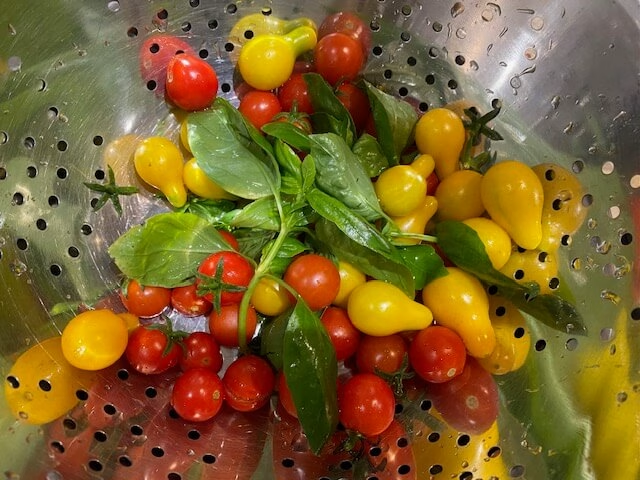
I added half a cooked red onion (finely diced), and a handful of our own whole fresh cherry and yellow pear tomatoes and spread the remainder of the pasta mix on the bottom of the part-cooked pastry.
Then I added the cooked butternut squash. Then, I made a traditional quiche egg and crème fraiche mix (only four eggs as the quiche was so full), adding Comté cheese and shredded basil (pushed just below the surface so it didn’t burn).
If I make this again without the pasta mixture available, I will probably add cooked smoked bacon matchsticks (allumettes) to the red onion base.
I cooked it for about 35 minutes at 175/180°c. Check to see if the egg mixture is cooked by sticking in a wooden skewer into the centre of the quiche.

This was very delicious and packed with fresh ingredients. The slightly heavy meatiness of the butternut squash contrasted well with the small whole tomatoes.
Butternut squash soup recipe
This is the first time I’ve made butternut squash soup and so wanted to keep it classic but also make it a little more interesting. I was cooking for an aunt and was mindful of her food preferences. I scouted for an appropriate recipe online and on my bookshelf and wasn’t happy with what I found, so I used another soup recipe as a guide to try and understand how much stock I would need.

There was a recipe for pumpkin soup in a Delia Smith vegetarian cookbook I have (thanks Delia), and I used her stock-to-pumpkin measurements as a rough guide. All the other ideas are mine: whether instinctive or accidental.
My ingredients:
1600g of cooked butternut squash
2 red onions finely chopped
3 garlic cloves crushed
1.5/2 teaspoons of cumin (according to taste)
1.5 litres of chicken stock
1 x small coconut milk box 200ml
250 ml milk
Fresh sage
Crème fraîche – about 150g added to soup mixture and then a teaspoon per bowl as a garnish with chopped fresh sage to serve
I finely chopped the red onion and slow cooked this until it was lovely and caramelised. I added the crushed garlic at the very last minute for just a light cook. There’s nothing worse than overcooked garlic (sacré bleu) in a dish of subtle flavours.

I then added the cumin, cooked that for about 30 seconds and then mixed in the cooked butternut squash. Then, I put in about 1.5 litres of chicken stock (made from stock cubes). Chicken stock was all I had but you could use vegetable stock cubes instead. I mixed it together with an electric hand blender.
In Delia’s pumpkin soup recipe, she also uses milk. As the soup consistency was still a bit thick for my liking, I added about 250ml of milk. I then added a small box of coconut milk and some crème fraiche. When I was happy with the consistency, I stopped adding anything further.
Here in France, they sell small coconut milk and coconut cream boxes (200ml) as well as the larger tins. I tend to buy the smaller boxes as I find that a small amount is often all you need. Using the small boxes is not only cheaper, but it prevents you from flooding the dish with coconut. “Less is more” being a good lesson from French cooking.
The cumin was an accident. We had bought some local Gascogne (Gascony) carrots from a shop and the pack came with a cumin sachet, so I thought I would use it up. The cumin created a little “curry” style taste, but this was not overpowering.
My aunt, who has been staying, doesn’t like curry and she loved this soup.
As an alternative to cumin, I might try ginger or rosemary and thyme as other options. You can also add a chilli, and I have been growing them, but my aunt doesn’t like chillis, so I kept it out. But, heh, the cumin worked well so, as they say, when it’s not broken why fix it?
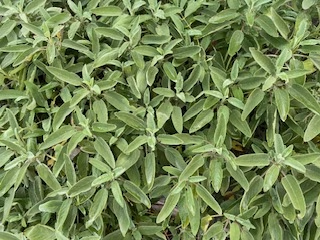
Just before serving I garnished each individual soup bowl with a teaspoon of crème fraiche and finely chopped fresh sage (sauge).
The verdict was that it was pretty much perfect and delicious. It used up the biggest butternut squash on the veg patch.
Which was the best way to use the butternut squash?
I asked this question and was met with a surprising chorus of stern responses, which is that you can’t compare any of them as the dishes were all so different – and all very good.
As with all savoury recipes, season with salt and pepper to your taste.
Bon Appetit.
If you wish to share your own positive experiences of growing and cooking Butternut Squash, feel free to drop me a line (email, Instagram or WhatsApp).
Disclaimer:
Dear reader,
These recipes have been written as a useful information-only resource with the aim of spreading a little joy and happiness. The author takes no liability for any kitchen “chaos” or injuries that may arise or forseen and unforseen food allergies.
Bon appétit (enjoy your meal).
Copyright © 2026, Peyroulat.com. All Rights Reserved. All the original written content on this site is copyrighted and belongs to the writer and publisher. Content cannot be reproduced in any form without the express permission in writing of the author and publisher. All blogs on this website are original creative content.